
This guide will help you navigate the complexities of room block contracts, empowering you to make informed decisions for your event or group travel. By breaking down key terms and concepts, you’ll gain a clearer understanding of what to expect when negotiating with hotels and venues. Whether you are planning a wedding, conference, or family reunion, grasping these imperatives will aid in securing the best arrangements for your needs and ensure a smooth booking experience. Let’s probe the terms that matter most to you.

Key Takeaways:
- Room Block Definition: A room block refers to a set number of hotel rooms reserved for a particular event or group, ensuring availability for attendees.
- Contract Terms: Essential contract terms include the cut-off date, which is the deadline for making reservations, and the attrition clause, which addresses penalties for not utilizing the reserved rooms.
- Negotiation Points: Understanding negotiable items such as rates, complimentary upgrades, and cancellation policies can significantly benefit the event organizer.
- Payment Structure: Familiarize yourself with the payment schedule and deposit requirements to avoid financial surprises and ensure compliance with the agreement.
- Production Rights: Know your rights concerning room production, which determine how many rooms you must fill to avoid fees and maximize your group’s benefits.
Understanding Room Block Contracts
While planning a large event, such as a wedding or corporate conference, negotiating a room block contract with a hotel can be a significant undertaking. Room block contracts allow you to reserve a set number of hotel rooms at a group rate, ensuring that your attendees have a convenient place to stay. Understanding the nuances of these contracts is imperative, as it enables you to secure the best accommodations for your guests while managing costs effectively.
Definition and Purpose
Some might wonder what a room block contract actually entails. A room block contract is a legally binding agreement that outlines the terms for reserving a specified number of hotel rooms for your event over a defined period. These contracts are designed to facilitate the booking process, often providing preferred rates and ensuring that rooms are held for your attendees. The main purpose of such contracts is to simplify the logistics of accommodation for both you and your guests.
Key Terms Explained
There’s a range of important terms associated with room block contracts that you need to be familiar with. Terms like “attrition,” “cut-off date,” and “rooming list” play vital roles in shaping the agreement. Attrition refers to the percentage of rooms you are obligated to fill by the time of the event, while the cut-off date is the deadline by which reservations must be made to secure the group rate. A rooming list is a document that provides the hotel with the names and details of guests who will be staying, helping in assigning rooms and managing check-ins.
To make the most of your room block contract, it is imperative to thoroughly review and understand these key terms. Familiarizing yourself with the specific language of the agreement can help you avoid unexpected fees or conditions. Clarity on these concepts ensures that you’re equipped to negotiate favorable terms and can maximize the advantages that come with booking a room block for your event.
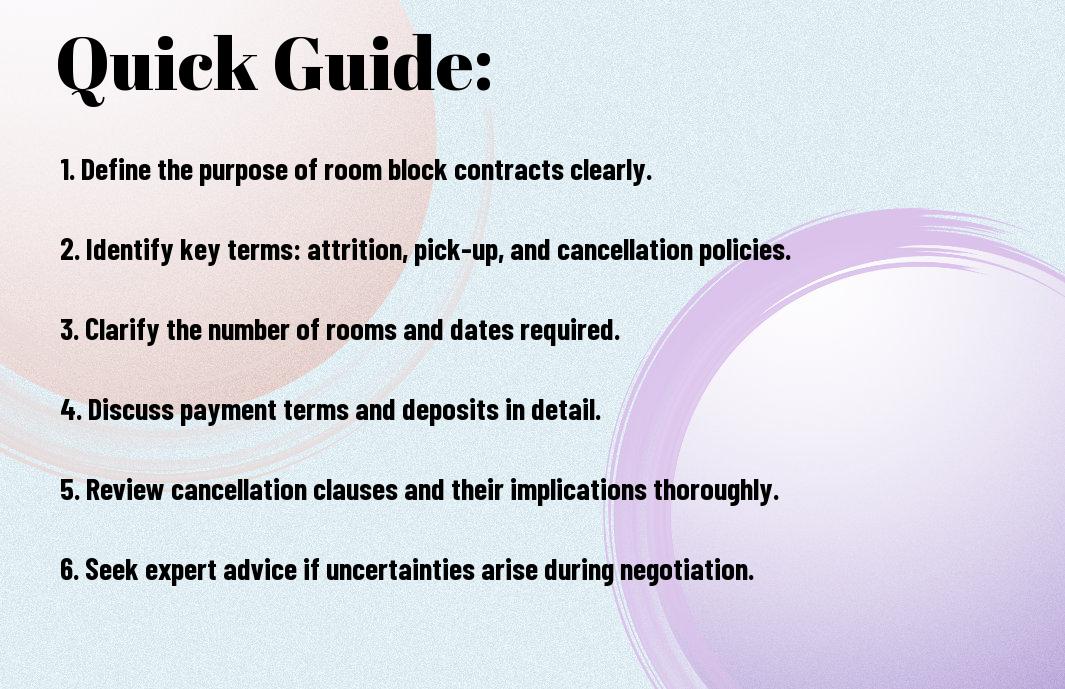
Types of Room Block Contracts
Even when planning a successful event, understanding the different types of room block contracts available can empower you in negotiations with hotels. Each contract type has specific terms and implications that can affect your overall budget and guest experience. Here is a breakdown of the most common types of room block contracts:
| Contract Type | Description |
|---|---|
| Guaranteed | The hotel guarantees room availability for a specific number of nights, even if they do not all get booked. |
| Unguaranteed | The hotel does not guarantee rooms unless they are booked, providing greater flexibility but potential risk. |
| Attrition | Allows you to reserve a certain number of rooms while stipulating the minimum number that must be booked to avoid penalties. |
| Block Release | Some rooms may be released back into the hotel inventory if they are not booked by a certain date. |
| Rooming List | A detailed list of guests, allowing for pre-check-ins and personalized services. |
Assume that you are preparing for a large group event; understanding how each type of contract functions will enable you to choose the most suitable option for your needs. The specific coverage and conditions can significantly impact your event budget and the convenience for your attendees.
Guaranteed vs. Unguaranteed
Contracts in the event planning sphere can often be categorized as either guaranteed or unguaranteed. A guaranteed room block contract offers you and your guests a firm commitment from the hotel for a specific number of rooms at a set rate. This means you have assurance that the rooms will be available regardless of your group’s booking level. On the other hand, an unguaranteed contract gives you flexibility, allowing you to reserve rooms without the same level of commitment from the hotel. However, this may result in higher rates if demand spikes closer to your event date.
Understanding these distinctions allows you to align the contract type with your event strategy. A guaranteed block may be beneficial for larger gatherings, ensuring all rooms are prepped and reserved for attendees, while an unguaranteed block may suit smaller events or gatherings that involve guest preferences that are not yet finalized.
Pick-Up Patterns
For effective event planning, it’s imperative to be aware of room pick-up patterns, which describe how and when rooms are booked within the reserved block. The ability to identify and analyze these patterns can greatly influence your decisions regarding room block contracts. Understanding your group’s typical booking behavior will help you negotiate better terms and avoid penalties related to unfulfilled commitments.
Patterns can shift depending on various factors, such as seasonal trends, attendee demographics, and marketing efforts. For instance, a corporate meeting may see a surge in bookings weeks prior due to firm attendance confirmations, while a wedding block might fluctuate as guests finalize their travel plans. By analyzing historical data from past events, such as how many guests booked their rooms early versus last minute, you can optimize your strategy and ensure that your room block reflects the actual demand of your event.
Tips for Negotiating Room Block Contracts
After you understand the fundamentals of room block contracts, it’s time to focus on negotiation strategies that can help you secure the best terms for your event. Start by clearly defining your needs and base your negotiations on that information. Being well-prepared can empower you to discuss terms effectively. Here are a few tips to consider:
- Research multiple hotels to compare rates and terms.
- Clearly articulate your event details, including the expected number of guests and the duration of your stay.
- Don’t hesitate to ask for additional perks such as complimentary breakfast or parking.
- Be open to flexibility in your room block size or cancellation dates.
Knowing how to approach your negotiations will set the stage for a successful contract that aligns with your goals.
Essential Questions to Ask
While negotiating room block contracts, you should develop a list of vital questions that address your specific needs. Ask about the minimum number of rooms you need to secure your preferred rate, as well as the maximum number to avoid penalties. Additionally, inquire about the method for releasing unused rooms and the timeline for doing so. Understanding the hotel’s policies surrounding group rates, including how they handle rate discrepancies, is also important.
Furthermore, you should clarify any additional fees that may apply, such as resort fees or service charges. Information about breakfast options, parking, and Wi-Fi access can also significantly impact your overall budget. The more questions you ask, the better informed you will be in making decisions that suit your event.
Understanding Cancellation Policies
Essential to your negotiation is a comprehensive understanding of the cancellation policies outlined in the contract. These policies dictate what happens in the event that you need to change your booking or cancel altogether, which can be a significant concern for event planners forecasting large gatherings. Be sure to clarify the penalties associated with cancelling and how far in advance you can make adjustments without incurring fees.
Policies can vary significantly from one venue to another, so take the time to comprehend each option. Some hotels may offer more lenient terms, while others might have strict rules that could leave you liable for costs. Knowing the nuances of cancellation policies not only protects you financially but also helps you accommodate any unforeseen changes in your plans.
Step-by-Step Guide to Creating a Room Block Contract
Keep in mind that creating a room block contract involves several imperative steps to ensure that your needs are adequately met. This guide breaks down the process into manageable stages, making it easier for you to navigate through the contracts involved.
Step Breakdown
| Stage | Description |
|---|---|
| Initial Planning | Defining your requirements and budget. |
| Negotiation | Discussing terms with the hotel or venue. |
| Finalizing Details | Final adjustments and signing the agreement. |
Initial Planning
Some of the most effective room block contracts start with thorough initial planning. You should assess the number of rooms required based on your guest list and determine your budget. Take into consideration the peak days of your event and seek to align your requirements with the hotel’s availability. Make notes about your preferred hotels and their amenities, as this will help in narrowing down your choices when reaching out.
Your goal during this phase is to create a clear outline that reflects your expectations. Ensure that you include special requests, such as specific bed types or room configurations, as well as any additional needs such as parking or accessibility. Having all this information ready will streamline your negotiations and help you present your requirements more effectively.
Finalizing Details
The final steps involve careful review and agreement on the terms you’ve negotiated. Once you’ve reached a consensus with the hotel, it’s time to finalize the details of the contract. To do this, double-check that all pertinent information is laid out clearly, including rates, cancellation policies, and group name association. This transparency helps avoid any misunderstandings down the line.
Guide your discussions toward clarity by asking questions about anything that seems ambiguous. Ensure that you pay special attention to the payment terms and conditions, as well as the deadlines for making reservations. Once both parties are in agreement, you’ll be ready to sign, locking in your room block. Take the time to read the entire contract, and don’t hesitate to seek clarification on anything that feels uncertain before moving forward.
Factors to Consider When Choosing a Venue
Now that you’re prepared to navigate the complexities of room block contracts, it’s imperative to consider certain factors when selecting a venue for your event. Your choice of venue can significantly impact the overall experience for you and your guests. Here are some key aspects to evaluate:
- Location and accessibility
- Amenities and services
- Capacity and layout options
- Pricing and availability
- Atmosphere and ambiance
This set of considerations will help ensure you select a venue that aligns with the needs and expectations of your guests while supporting the objectives of your event.
Location and Accessibility
With the ease of access to your venue being a top priority, it’s vital to consider its location. You want a space that is convenient for your attendees, ideally situated near major transport hubs, such as airports and train stations. Factors such as local traffic, parking availability, and public transportation options will influence how easily your guests can reach the venue.
Additionally, accessibility for individuals with disabilities is an important factor to take into account. Ensuring that your venue is compliant with accessibility standards will help create an inclusive environment for all your attendees. This attention to detail will reflect positively on your event and your organization.
Amenities and Services
Any venue you consider should offer a variety of amenities and services that cater to your event’s specific needs. Look for facilities that provide imperative elements such as audio-visual equipment, Wi-Fi access, catering options, and furniture. All of these services will contribute to the overall functioning of your event and can alleviate stress on your end in the planning process.
This consideration goes beyond merely having the right equipment. You should also assess the quality of the services provided, including the professionalism of the staff and the responsiveness of the venue management. Ensuring that your venue is well-equipped and staffed will enhance your guests’ experience and enable you to focus on delivering a successful event.
Pros and Cons of Room Block Contracts
Once again, understanding room block contracts involves weighing the advantages and disadvantages that come with them. While these contracts can streamline your event planning and provide savings, they also have their drawbacks. The following table summarizes the key pros and cons to help you make an informed decision:
Pros and Cons Summary
| Pros | Cons |
|---|---|
| Discounted rates for guests | Minimum room commitment may lead to penalties |
| Simplified booking process for attendees | Limited hotel options |
| Ability to secure a group of rooms | Deposit requirements may impact cash flow |
| Increased convenience for managing group logistics | Cancellation policies can be restrictive |
| Potential for various amenities and upgrades | Risk of not filling the block, leading to additional costs |
Advantages for Event Planners
On the positive side, room block contracts are beneficial for event planners like you by providing discounted rates and ensuring guest accommodations. When you secure a block of rooms, you create a more streamlined booking process, allowing attendees to easily reserve their stay, often at a rate lower than the regular market rate. Additionally, having a guaranteed number of rooms makes it easier for you to plan around the expected size of your event, ensuring your guests are well accommodated within proximity to the venue.
On top of that, room blocks may offer various perks, such as complimentary parking, upgraded accommodations, or additional breakfast options, depending on the hotel’s policies. This not only enhances your event’s overall experience but can also boost engagement among attendees, as the added benefits encourage them to reserve within your designated block. Overall, the advantages of securing a room block can lead to better event organization and enhanced attendee satisfaction.
Potential Disadvantages and Risks
There’s no denying that while room block contracts have their merits, they also present certain disadvantages and risks that you should consider. One of the primary concerns is the minimum room commitment often associated with these contracts. If you fail to meet the contracted threshold, you may incur penalties, such as paying for unsold rooms, ultimately affecting your event budget. Additionally, the cancellation policies of some hotels can be quite stringent, making it challenging for you to adjust your plans as needed.
Planners who secure room blocks also face the possibility of needing to commit to a deposit early on, which can put a strain on your financial resources, particularly if you’re working with a limited budget. Moreover, the limited choices of participating hotels can restrict your attendees’ options, potentially impacting their willingness to book within your block. Understanding these potential downsides can help you mitigate risks and plan more effectively for your event. Always ensure you fully evaluate the terms of the contract and consider your audience’s preferences before proceeding.
Summing up
To wrap up, grasping room block contracts is necessary for you as you navigate the complexities of planning an event or group travel. Understanding key terms such as attrition, cutoff dates, and release policies can greatly impact the financial outcome of your event. This knowledge empowers you to negotiate better terms with hotels and ensures that you maximize your resources while minimizing risks associated with unused rooms.
Furthermore, familiarizing yourself with the specifics of room block contracts allows you to create an effective strategy tailored to your unique needs. By clearly defining your goals and understanding the hotel’s policies, you enhance your ability to coordinate successful events. Ultimately, your proactive approach to managing these contracts can lead to smoother logistics and a more satisfying experience for everyone involved.
FAQ
Q: What is a room block contract?
A: A room block contract is an agreement between a group and a hotel to reserve a certain number of rooms for a specific period. This is often used for events such as weddings, conferences, or large gatherings to ensure that attendees have accommodations nearby. The contract typically outlines terms related to the number of rooms, the rate per room, and cancellation policies.
Q: What are the key terms commonly found in a room block contract?
A: Key terms in a room block contract usually include: 1) Room Block Size – the number of rooms reserved; 2) Cut-off Date – the deadline for guests to book rooms at the agreed rate; 3) Attrition Clause – a provision stating how many rooms must be filled to avoid penalties; 4) Rate and Payment Terms – details on the room rates offered and payment procedures; 5) Cancellation Policy – specifics on how and when to cancel the contract without incurring fees.
Q: What is an attrition clause, and why is it important?
A: The attrition clause is a component of a room block contract that defines the acceptable decrease in room bookings without penalty. It allows groups to adjust their expected guest count while protecting the hotel from revenue loss. Understanding this clause is important so that groups can minimize financial risk if fewer attendees than anticipated need accommodations.
Q: How can I negotiate better terms in a room block contract?
A: To negotiate better terms in a room block contract, start by researching comparable hotel offerings and rates in the area. Be upfront about your needs and the size of your group to leverage potential discounts. Consider offering to promote the hotel to your attendees, and inquire about flexible cancellation and attrition terms. Lastly, having a clear understanding of your budget and requirements will empower you during negotiations.
Q: What should I do if my plans change after signing a room block contract?
A: If your plans change after signing a room block contract, immediately contact the hotel to discuss your options. Review the cancellation policy outlined in the contract to understand the potential consequences. Open communication with the hotel is crucial to explore modifications to the reservation or alternative solutions that may mitigate penalties for reduced room usage.


