
Table of Contents
- The Challenge of Coordinating Hotels for Large Athletic Teams
- Why Standard Hotel Booking Doesn't Work for Sports Groups
- How We Simplify Sports Team Hotel Sourcing
- Securing Multiple Options Within Days, Not Weeks
- Negotiating Rates and Concessions That Protect Your Program
- Managing Complex Contract Terms and Risk Protection
- Our Single Point of Contact Approach
- Real-World Examples: Multi-City Tours and Major Events
- Why Hotels Pay Us, Not Your Team
- Getting Started with Your Sports Travel Hotel Block
The Challenge of Coordinating Hotels for Large Athletic Teams
Managing hotel accommodations for a sports team—whether a college squad traveling to a tournament, a professional roster attending a multi-city event, or an amateur league organizing a regional championship—adds complexity that most standard travel booking methods can’t handle. Your team needs rooms for 50, 100, or 200+ athletes, coaches, and support staff, often across multiple nights and sometimes multiple cities. Availability and logistics become critical.
The real pressure comes from timing. Athletic events run on tight schedules. You might learn tournament dates just weeks before departure, or a team’s travel itinerary could shift based on playoff results or unexpected scheduling changes. Hotels need certainty, but your program needs flexibility.
Beyond logistics, there’s also negotiation. You want competitive rates, but hotels assume you’ll accept standard rates without leverage. You need contract protections like attrition clauses (guarantees that protect you if fewer rooms are booked than promised) and cancellation flexibility in case plans change. You may want concessions like complimentary upgrades for coaches, ground transportation, or meeting space.
Most event organizers tackle this alone, calling hotels one by one, comparing rates across spreadsheets, and managing contract details without specialized legal or negotiation experience. It’s doable, but it consumes weeks and often leaves value on the table.
Why Standard Hotel Booking Doesn’t Work for Sports Groups
Standard hotel booking sites and travel management companies were designed for individual or small-group leisure travel, not large athletic delegations with specialized needs.
Here’s what breaks down:
Volume and availability. When you search for 100 rooms across a specific 3-night window on a public booking platform, the system either shows you one or two options or nothing at all. Hotels hold inventory differently for group block requests than for individual bookings, so you miss most of the market without direct outreach.
Rate unpredictability. Online rates fluctuate daily based on demand and inventory. You may see one price on Monday, another on Friday. For a large group commitment, you need a locked-in rate that won’t change—and that requires negotiation, not a booking widget.
Contract gaps. Standard booking confirmations lack the protective clauses that matter for group travel. What happens if your team size shrinks after booking? What if the event date moves? Standard terms often include stiff cancellation penalties or force you to pay for rooms you don’t fill. You need tailored contract terms that align with sports travel reality.
No relationship management. Hotels treat individual bookings as transactional. With a group block, you need a primary contact who understands your team’s needs, handles changes without friction, and coordinates logistics like early check-in, late checkout, or special requests for athletes.
Negotiation barriers. Hotels offer their best rates and concessions to proven group coordinators with established relationships. If you’re calling as a first-time organizer without leverage, you get standard terms. You won’t learn about upgrades, fee waivers, or flexible attrition clauses unless someone on the hotel side proposes them.
How We Simplify Sports Team Hotel Sourcing
We handle everything from initial sourcing to final booking, acting as your single point of contact throughout the process. Our team brings hotel industry relationships and group sourcing expertise that most event organizers don’t have in-house.
Here’s what we do:
Rapid sourcing. We reach out directly to hotel chains and independent properties, accessing group inventory and availability that doesn’t appear on consumer booking sites. Within days, we return multiple qualified options—not just one choice.
Rate negotiation. We negotiate on your behalf, leveraging our market knowledge and relationships to secure competitive group rates. We also identify concessions: complimentary room upgrades, ground transportation discounts, fee waivers, or meeting space credits.
Contract protection. We review and negotiate critical terms. That includes attrition clauses (defining what happens if you book fewer rooms), cancellation windows (how long you can adjust your commitment without penalty), and rate protection (ensuring your rate stays locked regardless of market changes).
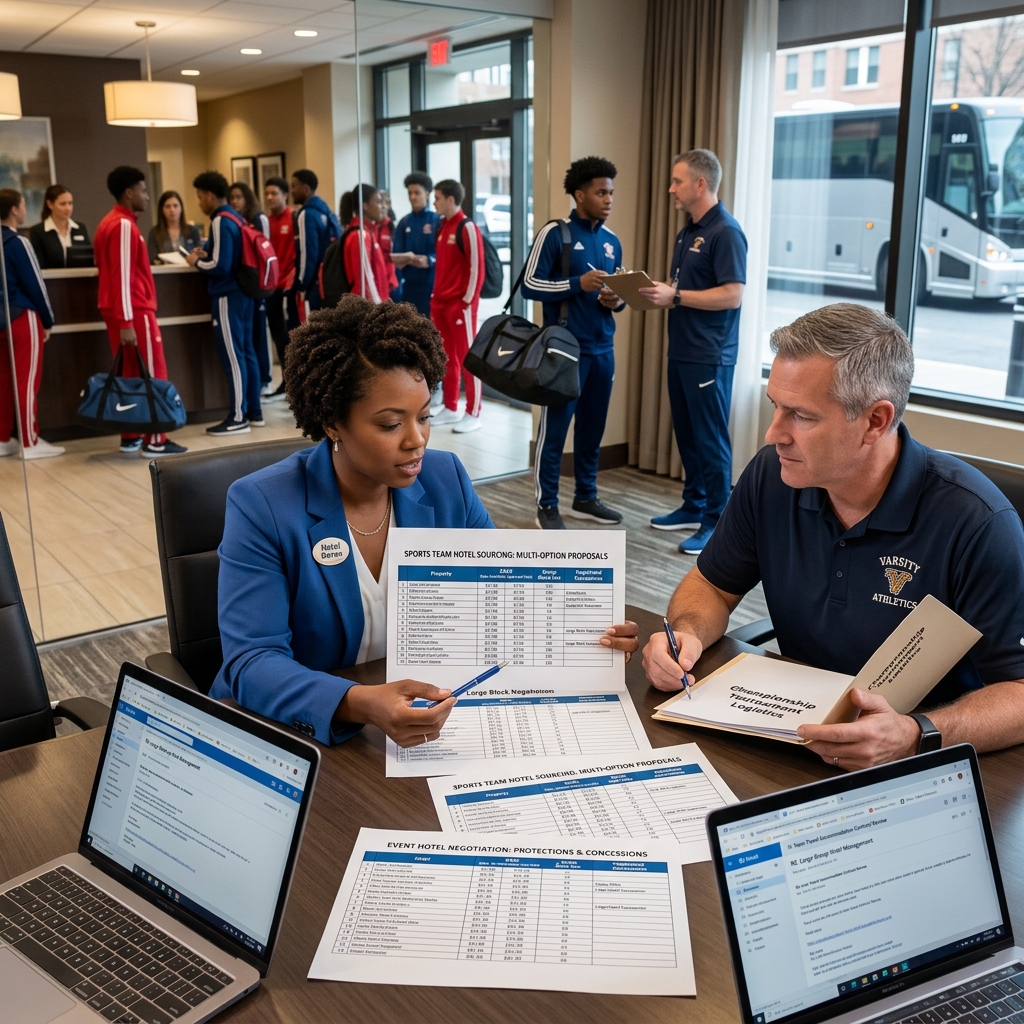
Customization for sports travel. Unlike generic group coordinators, we understand athletic event logistics. We’ve worked with college teams, professional rosters, amateur leagues, and tournament organizers. We know your schedule often changes, your rooms may empty mid-event, and you need flexibility without financial penalty.
Single point of contact. You don’t manage multiple hotel conversations or chase details across vendors. You work with us, and we coordinate with each hotel property. If changes arise, you tell us once—we handle the hotel side.
Securing Multiple Options Within Days, Not Weeks
Speed matters in sports travel. You might finalize tournament brackets on a Monday and need hotel proposals by Wednesday. Or a team’s travel decision could hinge on having accommodation options confirmed before players commit.
We move fast because we skip the back-and-forth delays that plague standard booking. Instead of waiting for hotels to respond to generic rate requests, we have established contacts at properties in key markets. We call directly, confirm group availability and rates, and compile a proposal deck with multiple options.
Here’s what your proposal typically includes:
- Hotel name, location, and distance to venue
- Nightly room rate per guest
- Total cost estimate (nights × rooms × rate)
- Room type breakdown (standard, suite, etc.)
- Key amenities (fitness center, on-site dining, parking availability)
- Proposed contract terms (attrition, cancellation windows, rate lock date)
- Any negotiated concessions (upgrades, credits, waivers)
You’ll usually see 3-5 qualified options within 2-4 days. That speed lets you compare choices, get team approval, and move to contract without the week-long delays common in other processes.
Once you select your preferred hotel, we finalize the contract, coordinate logistics with the property, and set you up with a dedicated hotel contact for ongoing communication.
What to do next: Have your dates, expected room count, and venue location ready. Those three pieces of information let us start sourcing immediately.
Negotiating Rates and Concessions That Protect Your Program
Rate negotiation for large group blocks isn’t about haggling—it’s about understanding market conditions, your leverage, and what value the hotel can offer beyond just a lower nightly rate.
We research competitive rates for your destination, season, and hotel category. Then we present your group size and length of stay to hotel sales teams, often securing rates 10-30% below walk-up pricing. The exact discount depends on market demand, how far in advance you’re booking, and how many rooms you’re committing to.
Beyond base rate, concessions often add more value than a small price reduction:
Complimentary room upgrades. Hotels often upgrade rooms for team leaders, coaches, or organizers at no cost. This shows respect to your team leadership and improves morale.
Ground transportation credits. Some hotels waive or discount shuttle service, parking, or ground transfer fees—especially if you’re generating 100+ room nights.
Meeting and event space. If your team needs a space for a team meeting, meal, or gathering, hotels may include a room at no rental charge.
Flexible attrition clauses. Standard attrition clauses penalize you heavily if your room count drops. We negotiate terms that give you breathing room—for example, allowing a 10-15% reduction before penalties kick in, or letting you release rooms 30 days out without penalty.
Rate protection. Your negotiated rate locks in, regardless of market changes. If hotel rates drop, you keep your rate. If they spike, the hotel absorbs the increase.
What to do next: When discussing your event with us, mention any specific team needs—early arrival, late checkout, meeting space, shuttle requirements. These often unlock concessions.
Managing Complex Contract Terms and Risk Protection
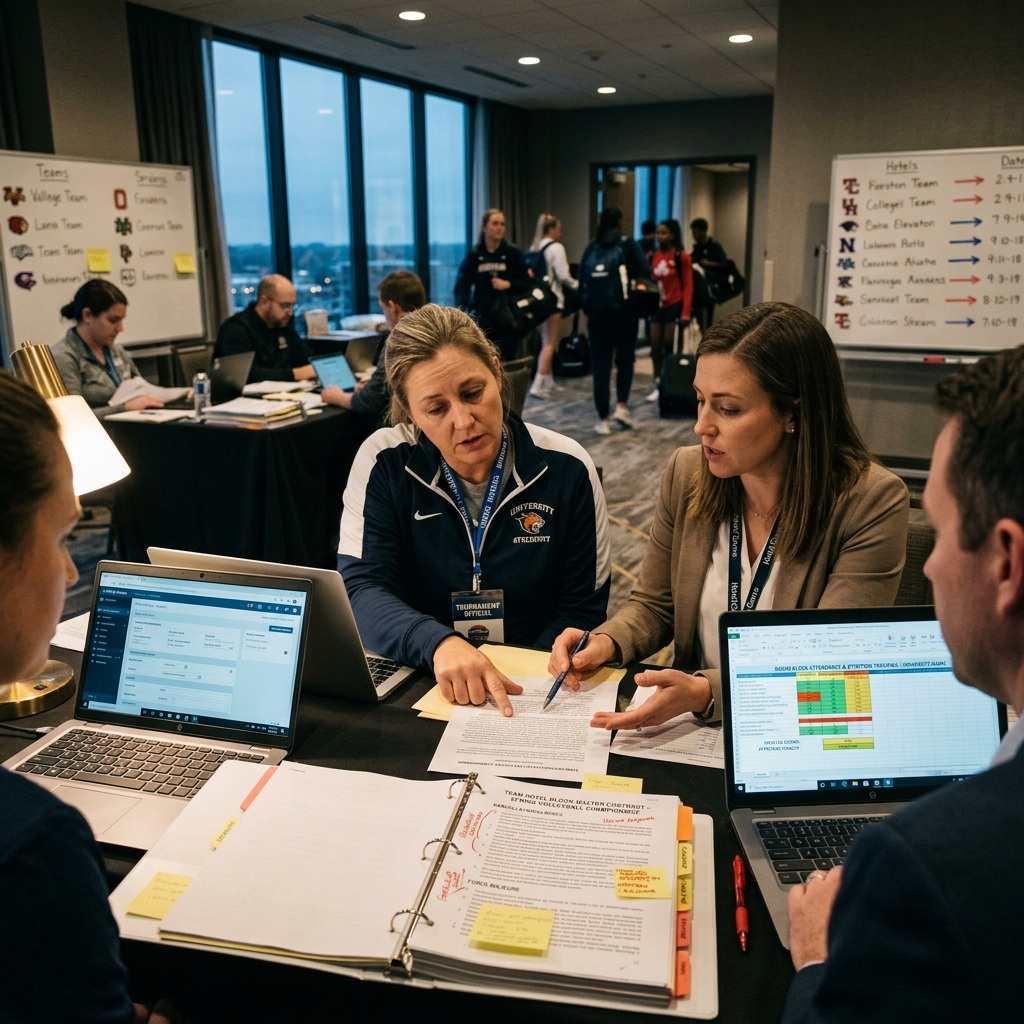
Athletic event hotel contracts can introduce risk if terms aren’t carefully structured. A poorly written cancellation clause, for example, could obligate you to pay for 100 rooms even if your tournament is cancelled and your team doesn’t travel.
We review and negotiate the terms that matter most:
Attrition. This defines what happens if your actual room nights fall short of your guarantee. Standard attrition might read: “If actual rooms drop below 80% of projected, you owe the difference at the agreed rate.” We negotiate softer terms, such as allowing 15% attrition before penalties, or requiring the hotel to make good-faith efforts to resell rooms before charging you.
Cancellation windows. These specify when you can reduce or cancel your block without penalty. Standard terms might give you 30 days; we push for longer windows (60-90 days) for events with variable timelines.
Event cancellation clauses. If your tournament or event is cancelled due to circumstances beyond your control (weather, emergency), does the hotel release you from payment? Standard contracts often don’t. We add explicit language that protects you if the event itself doesn’t happen.
Rate lock dates. Once your rate is negotiated and confirmed in writing, that rate is locked. No surprise increases, no hidden fees.
Billing and payment terms. We clarify when you pay, what’s included in the nightly rate (taxes, parking, resort fees), and what charges might appear separately.
What to do next: Don’t sign a hotel contract on your own. Bring it to us for review, or ask us to negotiate contract terms as part of our sourcing process. Contract language directly affects your financial risk.
Our Single Point of Contact Approach
Managing a large team hotel block creates a lot of moving parts. You’re coordinating with the hotel, your team, finance, and potentially multiple internal stakeholders. If each party communicates directly with the hotel, requests and changes get confused, messages get lost, and simple issues become complicated.
We centralize that communication. You work with one contact at Hotel Gurus. You tell us about changes, questions, or requests. We relay them to the hotel property, track responses, and keep you informed.
This approach saves time and prevents mistakes. For example, if your team roster changes and you need to adjust room quantities two weeks before arrival, you tell us once. We contact the hotel, confirm the new numbers, update charges if needed, and send you an updated contract. No back-and-forth with multiple parties.
It also builds accountability. You know exactly who to contact if something needs attention. We track every commitment, deadline, and detail. If the hotel needs to deliver something—early check-in, room assignments, parking passes—we follow up and confirm delivery.
For your team, this structure reduces friction. Athletes and coaches don’t need to contact the hotel directly. Logistics and special requests flow through us, ensuring consistency and professional communication.
What to do next: Once you select your hotel, confirm your primary contact at Hotel Gurus. That person becomes your single point of contact for all hotel-related matters through checkout.
Real-World Examples: Multi-City Tours and Major Events
Sports teams often navigate complex travel scenarios. Consider these common situations:
Multi-city tournament. A college basketball team qualifies for an NCAA tournament with games in three cities over two weeks. Teams, coaches, and support staff total 120 people. Dates and locations depend on bracket results, so you can’t finalize hotels until you know the schedule. You need rapid sourcing across three markets, flexibility to adjust room quantities after each game result, and coordinated logistics across three properties. We secured options in all three cities within 72 hours of bracket announcement, negotiated group rates across all properties, and built cancellation flexibility into each contract. When the team lost earlier than expected, we helped release unused room blocks without penalty.
International athletic event. A professional sports league hosts a multi-week international tournament in Mexico with teams from eight countries. Approximately 400 athletes, coaches, and staff require accommodations across four hotels in different areas of the host city. Language barriers, currency differences, and unfamiliar hotel markets complicate sourcing. We sourced Spanish-speaking hotel contacts, negotiated in local market context, secured favorable attrition terms (recognizing that international travel always sees some no-shows), and coordinated room assignments across all four properties. We also negotiated ground transportation and airport shuttle packages that streamlined arrival logistics for international teams.
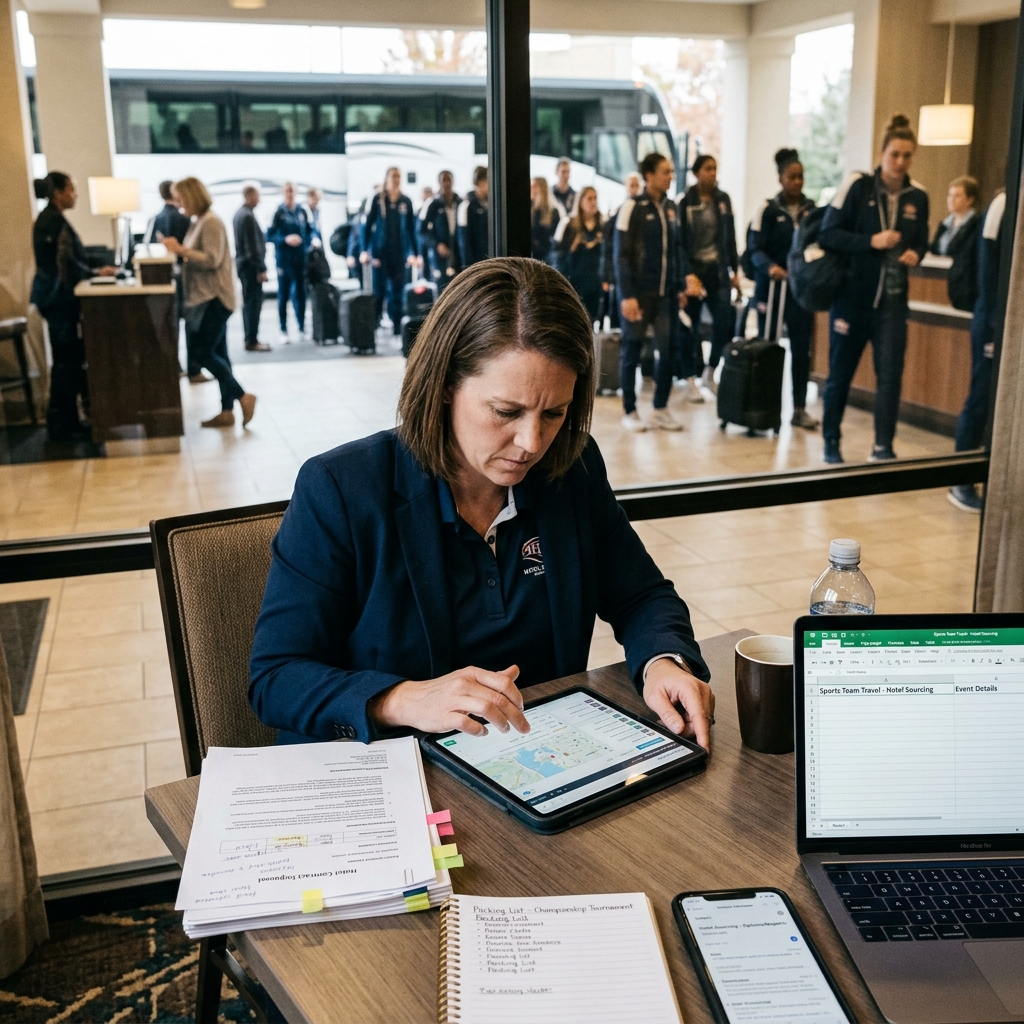
Last-minute championship event. A regional athletic organization learns that their city was selected to host a state championship with just six weeks’ notice. They expect 300 team members across multiple nights. Standard sourcing timelines don’t apply here. We reached out to 15+ hotels in the metro area, secured preliminary rates within 48 hours, and presented five qualified options within one week. The organization selected their top choice, locked in rates and concessions, and had contracts signed two weeks later—leaving ample time for logistics planning.
These examples highlight how flexibility, speed, and relationship leverage solve real problems that generic travel booking can’t address.
Why Hotels Pay Us, Not Your Team
You might wonder: if Hotel Gurus sources your hotel, do you pay a commission or booking fee?
No. Our service is completely free to you. Hotels pay us.
Here’s how it works. Hotels pay commissions to hotel groups and travel management companies that source room business—it’s standard in the industry. We position your group block with hotels, the hotel confirms the business, and the hotel pays us a standard commission. That commission is separate from the room rate you negotiate and pay to the hotel.
This arrangement aligns incentives. We have every reason to secure your group quickly, at competitive rates, with favorable terms. We’re not incentivized to pad costs or hide fees—the more attractive your offer, the faster we close business, and the hotel pays our commission out of their revenue.
From your perspective, you get expert sourcing, negotiation, and contract management with no out-of-pocket cost. You pay the hotel directly for rooms, at the negotiated rate. That’s it.
This model also removes pressure to book with a second-choice hotel just to cover costs. If Hotel A offers a better deal or experience than Hotel B, you book Hotel A. We’re paid either way.
What to do next: Ask any hotel block provider to detail their fee structure. If they charge you a commission, that cost typically runs 5-20% of total room revenue. With Hotel Gurus, there’s no commission, no booking fee, and no hidden costs. You pay the hotel rate you negotiated—nothing more.
Getting Started with Your Sports Travel Hotel Block
Starting the process is straightforward. You’ll need a few pieces of information:
Event details. Provide your event name, dates (or date range if confirmed later), expected total number of rooms, and whether you need one location or multiple cities.
Team profile. Share your expected room breakdown if relevant (standard rooms vs. suites, single vs. double occupancy, number of team leaders requiring separate accommodations). Also note any logistical needs: early arrival, late checkout, ground transportation, meeting space.
Venue location. Tell us where the event takes place (venue name, city, address). We source hotels within a reasonable distance—usually within 5-15 minutes depending on market density.
Timeline. Indicate when you’re booking relative to your event date (ideally 60+ days in advance for better rates, but we work with shorter windows too). Also share your internal deadline for making a hotel decision.
Once we have these details, we begin sourcing immediately. Within 2-4 business days, you’ll receive a proposal with multiple hotel options, rates, and key terms. You review, ask questions, and select your preferred choice. From selection to signed contract typically takes another 5-7 business days.
Throughout, you’re working with a dedicated contact at Hotel Gurus. Questions or changes? You reach out to your contact, and we handle the rest.
For most athletic events, the process from initial conversation to contract signature takes 10-14 days. We can accelerate for true urgencies, though earlier notice always produces better options and rates.
Ready to simplify your sports team hotel sourcing? Share your event details, and let’s get started. Hotel room blocks for events aren’t one-size-fits-all, and sports travel has its own demands—we’ve built our process around exactly that reality.


