
Estimate the number of guests you’ll need to accommodate for your upcoming event to ensure a seamless stay for everyone. Accurately determining your room block requires considering factors such as event type, date, and attendee demographics. In this guide, you’ll learn how to gather vital information, analyze trends, and make informed decisions that align with your event’s needs. By following these steps, you can confidently secure the right number of rooms, creating a comfortable experience for all your guests.
Key Takeaways:
- Analyze your event’s audience: Consider the demographics and interests of your attendees to better estimate participation.
- Review historical data: Look into past events for trends in attendance, helping you gauge the expected turnout.
- Survey potential guests: Utilize pre-event surveys to collect RSVP information, which can provide more accurate counts.
- Factor in accommodation preferences: Understand if guests prefer staying onsite or nearby, influencing your room block needs.
- Adjust for variables: Be prepared to modify your estimates based on factors like seasonality, competing events, and venue capacity.

Understanding Your Event
While planning an event, one of the first steps you should take is to understand its overall scope and purpose. Each event comes with its own set of expectations and requirements, which can significantly influence guest count. By gaining clarity on what you aim to achieve, you can start to make informed decisions about accommodations and logistics. Consider aspects such as the type of event, the audience demographics, and the potential engagement levels. This understanding will guide you in estimating the number of guests who may require a room block.
Identify the Nature of the Event
There’s a wide range of event types, from corporate gatherings to weddings and family reunions. Each will attract different types of attendees, which influences your guest count. For instance, a business conference may see a higher percentage of attendees coming from out of town, necessitating a larger room block, while a local wedding may have a more limited need for accommodations. By clearly identifying the nature of your event, you can better gauge how many guests will likely need hotel rooms.
Determine the Duration of the Stay
Understanding how long your guests will be staying can significantly affect your room block needs. The duration can vary depending on the type of event; a weekend wedding might only require accommodations for two nights, while a multi-day conference could lead to a longer stay. Analyze the schedule of your event to predict how many nights your attendees will be booking rooms. This insight will help you determine the necessary number of rooms to reserve and can inform your final guest count estimation.
Your ability to accurately estimate the duration of stay can also hinge on factors such as arrival and departure days, as well as any additional activities you may plan. If you’re hosting pre-event gatherings or post-event social hours, attendees may arrive earlier or stay longer than initially expected. Therefore, consider aligning your room block reservations with these trends to ensure your guests have ample accommodation, ultimately providing a seamless experience.
Estimating Guest Count
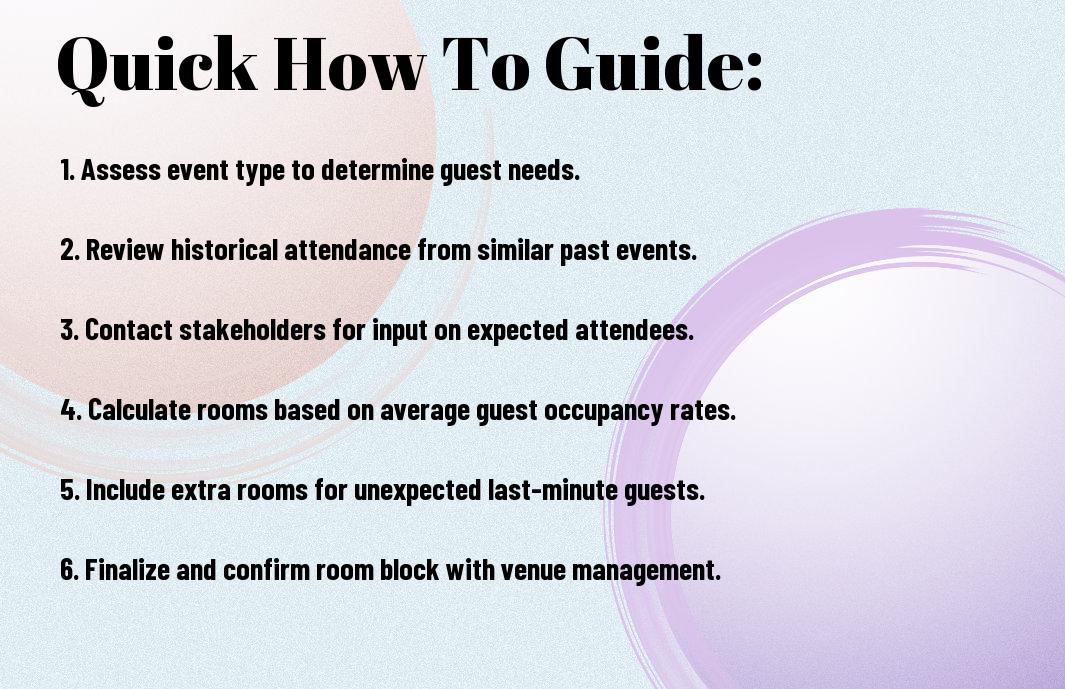
Some factors will influence your estimated guest count for a room block, and accurately gauging these elements ensures a smoother planning process. It is crucial to break down your estimation into manageable segments, allowing you to understand the potential turnout and to allocate adequate resources for accommodations. The better you estimate your guest count, the more efficiently you can negotiate rates with hotels and manage the logistics of your event.
Assessing Invitations and RSVPs
Now that you have a general idea of your expected guest count, it’s time to refine those numbers by assessing your invitations and their anticipated responses. When planning your event, consider sending out invitations early, allowing your guests sufficient time to respond. The type of event, its location, and the time of year can all affect response rates, so anticipate how these factors might influence your guests’ ability to attend. Tracking RSVPs systematically can aid you in adjusting your block according to real-time feedback, ensuring you secure the right amount of rooms without overcommitting.
Considering Guest Demographics
Assuming you know your audience well, understanding your guests’ demographics is integral in helping you predict attendance more accurately. Different age groups, families, or business-oriented individuals may have unique accommodation preferences and availability. Analyzing past events regarding attendee behaviors can provide insights, helping you tailor your room block offerings to suit your guests’ needs. While a younger crowd may prefer budget-friendly hotels, more established professionals could lean toward higher-end options, providing an important perspective in your estimations.
Invitations for your event may vary widely based on different demographics, as factors such as location, relationship to the host, and the nature of the event can influence who chooses to attend. For example, you might find that events aimed at families tend to draw a larger crowd, while business gatherings might result in a more modest turnout. By considering these aspects, you can better forecast your guest count, leading to a more effective and organized room block arrangement. Tailoring your accommodations to align with your guests’ expectations can also enhance their overall experience.
Factors Influencing Room Needs
Your estimation of guest count for a room block is influenced by various factors that can significantly affect how many accommodations you will require. Understanding these factors allows you to develop a more accurate projection. Here are some key considerations to keep in mind:
- Type of Event: Is it a wedding, corporate retreat, or family reunion?
- Guest Demographics: Are your guests primarily traveling alone or with families?
- Length of Stay: How many nights are your guests planning to spend?
- Travel Arrangements: Are guests booking their own accommodations, or will you be managing it?
Recognizing the unique aspects of your event will help you better understand the rooming needs and anticipate fluctuations in your guest count.
Travel Arrangements and Distances
There’s more to your guest count than just who is attending; travel arrangements can greatly influence how many rooms you’ll need. Consider the distances your guests must travel to the venue and whether they will require accommodations based on ease of access. If your event is located in a remote area or a bustling city, that can affect guests’ willingness to stay at local hotels or those further away. Additionally, if transportation is being provided, guests may feel more inclined to stay at designated hotels included in your block.
In many cases, proximity to the event can dictate the number of rooms you’ll genuinely need. Guests traveling from out of town may prefer options that minimize travel time, while locals may only require a room if they are attending activities that last well into the night. Understanding these travel dynamics can help you tailor your room block offer and make it attractive to potential guests.
Time of Year and Local Events
You should also take into account the time of year and any local events that might coincide with your gathering. Seasonal variations can significantly impact guest availability and hotel occupancy rates. For example, look into local festivals, conventions, or even national holidays, as these can draw significant crowds, making rooms scarce or more expensive than usual.
Another aspect to consider is how weekend vs. weekday events may affect your guests’ accommodations. For instance, if your event falls on a holiday weekend, the demand for rooms might increase, requiring you to reserve more to avoid the risk of running out. By staying informed about what’s happening in the area during your event, you can better estimate the number of rooms needed and ensure your guests have a comfortable, convenient place to stay.
Tips for Accurate Calculation
Despite the challenges that come with estimating guest counts for a room block, there are several strategies to ensure you arrive at an accurate figure. Start by considering factors such as the nature of the event, the time of year, and any regional trends that may influence attendance. Engaging with participants early on can also provide valuable insight into their plans. Here are some tips to assist you in refining your estimates:
- Survey your guests about their travel plans well in advance.
- Analyze past events to identify patterns in attendance.
- Consider the demographics of your guests to predict their travel preferences.
- Account for local accommodations and hotel capacity.
Knowing these factors will help you create a more realistic estimate for your room block requirements.
Creating a Rooming List
You should begin by creating a detailed rooming list to track who will be staying where. This list will allow you to allocate rooms based on the individual needs of your guests and help you manage any last-minute changes or cancellations. Organize your list by grouping guests based on their event participation levels, and collect information including arrival and departure dates, room preferences, and any special requests such as accessibility requirements.
By mapping out your rooming list diligently, you create a helpful framework that can serve as a guide when finalizing your room block arrangements with hotels. This proactive approach minimizes confusion during the event and ensures guests’ expectations align with what you’ve arranged for them.
Utilizing Hotel Block Management Tools
To enhance your efficiency in managing your room block, consider utilizing specialized hotel block management tools. These platforms are designed to streamline your booking process and provide real-time insights into room availability, guest reservations, and trends in your room block’s usage. By leveraging these tools, you can keep track of your guests’ accommodations effortlessly and adjust as necessary based on current data.
It’s beneficial to explore various hotel management solutions that offer features tailored to your needs, such as customizable reports and dashboards that track your guests’ engagement levels. By using these tools, you can significantly reduce the administrative burden of managing a room block and focus more on delivering a memorable experience for your guests.
Communicating with Hotels
Not every hotel will understand your specific needs right away, so clear communication is key to successfully managing your room block. Start by reaching out to the hotel staff and clearly outlining your expectations. Discuss the purpose of your event, the expected number of guests, and the variety of accommodations you may need. This will help the hotel provide you with accurate options and recommendations tailored to your group’s requirements.
Discussing Your Needs with Hotel Staff
Little details can make a big difference when discussing your needs with hotel staff. Be upfront about your budget constraints, special requests, and the amenities that are crucial for your guests, such as airport shuttles, parking availability, or breakfast options. Engaging in an open dialogue will not only demonstrate your seriousness as a client but will also allow the staff to pinpoint the best solutions to fit your group’s needs. The more information you provide, the easier it will be for the hotel to accommodate your requirements.
Securing the Best Rates and Availability
Availability can fluctuate significantly based on the time of year and local events. To secure the best rates and availability for your room block, it’s advisable to book as early as possible. Hotels often offer better rates for larger groups or for reservations made well in advance. Inquire about potential discounts for block bookings and explore various flexible cancellation policies. You should also compare offerings from multiple hotels to ensure you’re getting the most advantageous deal for your group.
Plus, don’t hesitate to ask about additional perks that may accompany your room block, such as complimentary amenities or services like shuttle transport and room upgrades. When negotiating, showcasing your commitment to filling their block might incentivize them to offer you a better deal. By approaching the conversation armed with information and a clear vision of what you need, you’ll be in a stronger position to secure favorable terms that benefit both you and your guests.
Adjusting Estimates
To effectively manage your room block, it’s important to refine your guest count estimates as you gather more information from your invitees. This process involves not just tracking initial responses but also being responsive to any changes in attendance. By setting up a systematic approach to gathering RSVP details, you can adjust your accommodations accordingly. It’s advisable to communicate with your guests regularly to encourage timely replies, ensuring you have an accurate picture of how many will attend and how many rooms you should reserve.
Monitoring RSVP Changes
One of the key strategies in adjusting your guest count is closely monitoring RSVP changes. People’s plans can shift for various reasons, and staying informed about these updates enables you to make necessary adjustments to your room block. Use tools like spreadsheets or event management software to keep track of responses and any modifications. This way, you can promptly adjust your reservations to accommodate any increases or decreases in your guest count, ultimately maximizing your room block’s efficiency.
Maintaining Flexibility with Room Blocks
With careful planning, you can maintain flexibility within your room blocks. It’s wise to negotiate with your hotel about your ability to make changes to your reservation counts as your event date approaches. Most hotels understand that guest attendance can fluctuate, and often offer policies that allow for minor adjustments without hefty penalties. By clarifying these terms ahead of time, you can ensure you’re not locked into a rigid agreement that does not reflect your actual guest needs.
A good approach is to establish a deadline for finalizing your guest count that aligns with the hotel’s policies. This gives you a clear target to work towards while still allowing some leeway for last-minute changes. Additionally, consider discussing contingency plans with the hotel, such as availability of extra rooms or options for short-term extensions. This proactive communication will help you accommodate any shifts in guest attendance, making your event planning far more manageable.
Summing up
Hence, accurately estimating the guest count for a room block requires a thoughtful approach that combines understanding your audience, projected attendance, and logistical needs. Start by considering the purpose of the event, such as weddings, conferences, or family reunions, which can significantly influence attendee numbers. Analyzing trends from previous events and soliciting feedback from your guests can further refine your estimates. As you assess these factors, keep in mind the flexibility needed to accommodate last-minute changes or unexpected responses.
Additionally, you should account for accommodations beyond your event attendees, such as VIP guests and potential overflow. Establishing a slight buffer will help avoid overbooking and ensure a comfortable experience for all. By utilizing these strategies, you can effectively tailor your room block to match your estimated guest count while maintaining the integrity of your event and providing a pleasant stay. Balancing these factors will lead to a successful guest experience and a well-managed logistics plan.
FAQ
Q: How should I begin estimating the guest count for a room block?
A: Start by considering the nature of your event and the number of attendees expected. Review historical data from previous events, if available, to understand typical attendance rates. Additionally, consider factors such as the size of the event, the location, and the time of year, as these can all influence guest numbers. Gathering insights from the organizing committee or stakeholders can also provide valuable perspectives on expected attendance.
Q: What factors should I take into account when estimating hotel room needs?
A: When calculating your hotel room needs, consider the type of event and its duration. Assess the profile of your guests – are they traveling alone, with family, or in groups? Additionally, factor in local attractions and amenities that might encourage guests to extend their stay. Analyze transportation options and distances from the event venue to potential hotels, as accessibility can also impact guest choices and numbers.
Q: Is it beneficial to overestimate or underestimate the guest count?
A: It can be advantageous to slightly overestimate your guest count to ensure availability, as it helps accommodate last-minute bookings or unexpected guests. However, significant overestimation may lead to financial implications such as unoccupied rooms and lost revenue for the hotel. A balanced approach is wise, using data and input from stakeholders to reach a realistic figure.
Q: How can I get feedback from potential attendees about their attendance?
A: Conducting pre-event surveys or sending out save-the-date invitations can be an effective way to gauge interest and expected attendance. Utilize online tools and platforms to create simple surveys that ask about guest preferences, travel plans, and accommodation needs. Engaging with guests through social media or event websites can also encourage responses and provide clarity on estimated attendance.
Q: What should I do if my final guest count fluctuates after securing a room block?
A: Stay in communication with the hotel or venue regarding any changes to your final guest count as early as possible. Many hotels offer flexibility in terms of adjusting your room block, but it’s important to abide by their policies for cancellations or modifications. Having a contingency plan for excess or reduced guest numbers – such as a list of alternative accommodations or additional rooms – can also be helpful in managing changed circumstances.


