
Basics of hotel room blocks can save you time and money when planning your next event, wedding, or group trip. Understanding the fundamentals allows you to negotiate better rates, ensure availability, and provide a seamless experience for your guests. In this guide, you will learn what hotel room blocks are, how they work, and important tips to maximize your bookings. Whether you’re a seasoned planner or tackling this for the first time, this information will empower you to make informed decisions that benefit you and your group.
Key Takeaways:
- Hotel Room Blocks are reserved groups of hotel rooms set aside for events such as weddings, conferences, or reunions, ensuring guests have a place to stay at a preferred rate.
- Booking Process involves reaching out to hotels to negotiate the number of rooms, rates, and terms, ideally starting this process well in advance of the event.
- Contract Details should include important aspects like payment policies, cancellation terms, and cut-off dates to avoid unexpected costs.
- Room Release Policies dictate how unused rooms will be handled and can affect overall costs, so it’s vital to clarify these with the hotel.
- Communication with attendees about the hotel options and booking links is vital for maximizing the use of the room block and ensuring that guests can make reservations easily.
Understanding Hotel Room Blocks
Before entering into the specifics of hotel room blocks, it’s necessary to grasp what they actually entail.
Definition of Hotel Room Blocks
Hotel room blocks are a set number of hotel rooms that are reserved for a specific group or event, usually for attendees of a wedding, conference, or other large gatherings. These rooms are typically held at a negotiated group rate, ensuring that your guests can stay at the same location for convenience and camaraderie. The hotel will reserve these rooms under a designated name, and you will often have a specified timeframe in which to book the rooms before they are released back to the public.
Importance in Event Planning
The importance of hotel room blocks in event planning cannot be overstated. They not only simplify accommodations for your guests but also enhance their overall experience by ensuring their stay is comfortable and conveniently located. By coordinating a block of rooms, you create a central hub where your attendees can connect and engage with one another, fostering a sense of community around your event.
With a firm understanding of hotel room blocks, you can effectively manage your guest accommodations, alleviating stress for both you and your invitees. Securing a room block allows you to support your guests in navigating their stay while also optimizing budget allocation for your event. This strategic approach enables you to focus on other important aspects of your planning, all while ensuring your attendees feel cared for and valued throughout the experience.
Types of Hotel Room Blocks
While planning your event or wedding, you may come across different types of hotel room blocks to accommodate your guests. Each type serves unique needs and comes with its own set of benefits. Understanding these options can help you make informed decisions about your lodging arrangements.
| Type of Room Block | Description |
| Courtesy Blocks | Reservations made without a financial commitment; often held for a limited time. |
| Contracted Blocks | Rooms reserved under a firm agreement, usually with a set number of nights and terms. |
| Group Blocks | Room blocks for larger parties needing multiple rooms, often with discounted rates. |
| Release Blocks | Rooms that are reserved to allow for overflow if needed but may be released back to the hotel. |
| Individual Reservations | Room bookings made directly by guests without a designated block. |
Recognizing the differences between these room block types can empower you to select the best option for your situation and ensure a seamless experience for your guests.
Courtesy Blocks
For a variety of events, courtesy blocks are an excellent choice. They allow you to hold a set number of rooms at a hotel without a financial commitment. This can be especially helpful for weddings or events where attendees might have varying schedules and availability. Typically, courtesy blocks come with a deadline after which rooms are released back to the hotel, so it’s vital to communicate this to your guests to encourage early booking.
Your guests may enjoy the freedom provided by courtesy blocks, knowing they’re not tied to a specific reservation until they are ready to commit. However, be aware that if the block’s cut-off date passes and rooms are still available, there is no guarantee that the same discounted rates will apply, as rates may fluctuate based on demand.
Contracted Blocks
Blocks are generally more structured than courtesy blocks, as they require a contract specifying the number of rooms reserved and the dates they will be held. These agreements often come with benefits such as discounted rates, complimentary upgrades, or even breakfast options for your guests. It’s vital to negotiate your terms with the hotel to maximize value and ensure your guests’ comfort.
Hotel management typically sets minimum acceptable reservations for contracted blocks, which means you’ll need to estimate how many guests are likely to book through your block. If the number falls short, you might incur penalties or have to reconsider the contract conditions. Therefore, engaging in clear communication with your guests and collecting RSVPs early can help you gauge interest and manage your room requirements effectively.
Step-by-Step Process for Booking Room Blocks
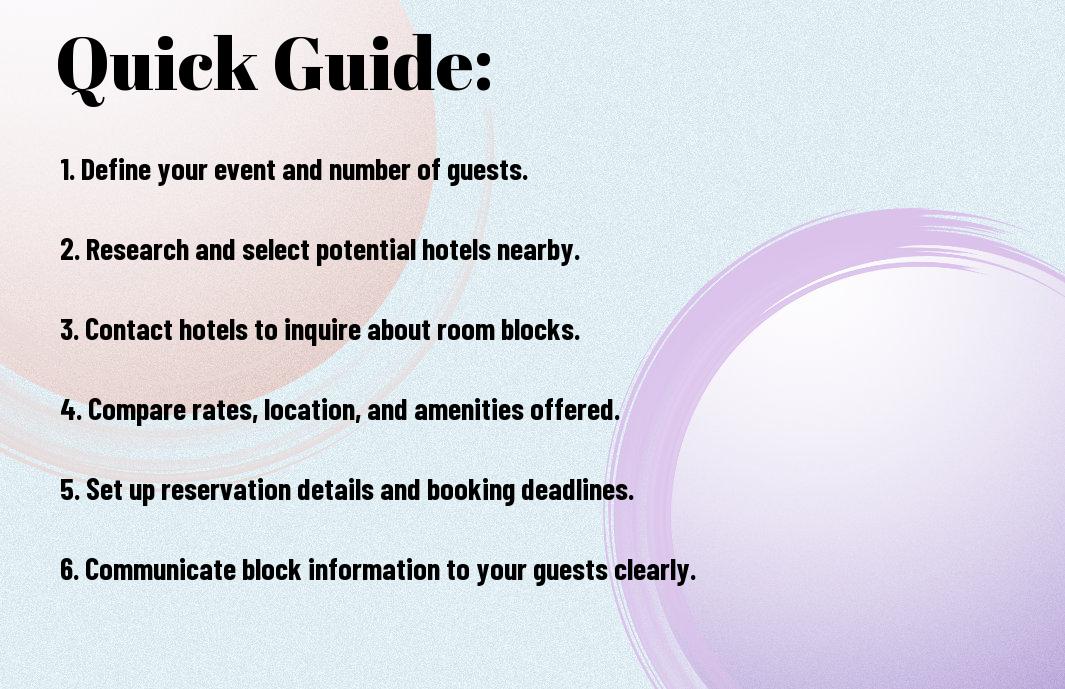
Unlike the more spontaneous planning that a typical hotel stay might involve, securing a room block for an event requires careful consideration and strategic steps. This structured approach ensures you meet the needs of your guests and make the most of your arrangements. The following table presents a succinct outline of the key steps in the booking process.
| Step | Description |
|---|---|
| 1. Evaluating Your Needs | Understanding the size of your group and the specifics of your event. |
| 2. Reaching Out to Hotels | Contacting multiple hotels to compare options and availability. |
| 3. Finalizing Contracts | Reviewing and signing contracts to secure your room block. |
Evaluating Your Needs
There’s a significant difference between booking a room for a single night and securing a block of rooms for a group. Take the time to carefully assess the size of your party, the duration of stay, and any specific requirements for meeting spaces or amenities. This evaluation will form the foundation of your negotiations with hotels, helping you to communicate your exact needs effectively.
Understanding what you require in terms of room types, pricing, and additional services like breakfast or shuttle transportation can save you time and effort down the line. Before reaching out to hotels, outline your guest list, anticipated arrival and departure dates, and any special requests that may enhance your group’s stay.
Reaching Out to Hotels
There’s no shortage of hotels that can accommodate your needs, but initiating contact with them is important. Compile a list of potential hotels close to your event venue or that meet your group’s preferences, and reach out to each to discuss availability and pricing for your desired dates. Consider asking about any current promotions or incentives for group bookings, as these can often influence your final decision.
Your goal here is to gather as much information as possible. Be prepared with questions about the number of rooms available, cancellation policies, and any additional fees that might be incurred. This thorough approach will allow you to compare options more effectively and help you negotiate better terms if needed.
Finalizing Contracts
Little else solidifies your booking in the hospitality industry like the finalizing of contracts. Once you’ve evaluated your options and chosen a hotel that meets your criteria, it’s time to review the contract carefully. Pay attention to details such as the payment structure, group rate guarantees, and cancellation policies. Ensuring that you are comfortable with all the terms is vital to avoid unexpected issues later.
Understanding the contract is key to protecting your interests. Don’t hesitate to ask the hotel management for clarification on any points that seem unclear or that you would like to negotiate further. A well-understood contract can provide peace of mind for you and your guests, ultimately allowing everyone to enjoy the event and stay without concern.
Essential Tips for Managing Room Blocks
Many event planners face challenges when it comes to managing room blocks effectively. To help you navigate this process, consider implementing the following strategies:
- Communicate early and often with your hotel partner.
- Establish clear deadlines for room bookings and cancellations.
- Monitor reservations regularly to gauge interest and adjust your block if necessary.
- Encourage attendees to book their rooms as soon as possible.
- Stay in touch with your attendees to ensure their needs are met.
Any effective management of room blocks will lead to a smoother experience for both you and your attendees, ultimately contributing to the success of your event.
Communicating with Attendees
With effective communication being key to ensuring a successful event, it’s important that you keep your attendees informed about the available accommodations. Regularly providing updates and vital information regarding your room block will not only help attendees secure their stay but will also create excitement and anticipation for your event. Consider sending reminders via email or social media about the block reservation details as the event date approaches.
Additionally, make sure to clarify the importance of booking through the designated link or process you’ve established. Offering insights into why attendees should utilize your room block—such as competitive rates or included amenities—can further incentivize them to secure a reservation. By staying proactive in your communication efforts, you create a sense of urgency and encourage attendees to act quickly.
Keeping Track of RSVP’s
For effectively managing room blocks, keeping track of RSVP’s is a fundamental aspect that you should prioritize. Successfully gathering RSVP data allows you to forecast your accommodation needs accurately, ensuring you don’t over or under-book your rooms. A well-organized spreadsheet or an event management tool can help you streamline this process. Updating your RSVPs in real-time will allow you to make adjustments to your room block if required, maximizing your group’s options.
Track the RSVPs and hotel bookings closely to avoid unnecessary complications later on. By organizing every response and noting the preferences of attendees, you enable a more tailored experience for your guests. This proactive approach will help you gauge the level of interest in your event, making room for timely adjustments that cater to your attendees’ needs. This way, you not only ensure that everyone has a place to stay but also enhance their overall experience, leaving a lasting impression. Any successful event starts with careful preparation and attentiveness to your guests’ accommodations.
Factors to Consider When Selecting Hotels
Now that you are ready to explore hotel options for your event, there are several key factors to consider when selecting the right accommodations. Making an informed decision can significantly enhance your guests’ experience and ensure a smooth event. As you evaluate your choices, consider the following:
- Proximity to the event venue
- Room rates and discounts
- Hotel reputation and reviews
- Capacity to accommodate your group size
- Accessibility for all guests
Any one of these factors could greatly impact your guests’ comfort and satisfaction, emphasizing the importance of thorough research.
Location and Accessibility
On the surface, the location of your selected hotels may seem straightforward, but it plays a pivotal role in the overall experience for you and your guests. Ensure that the hotel is conveniently situated near the venue. Your guests may be traveling from out of town, and you want to minimize their travel hassle. Accessibility to public transportation, major highways, and nearby attractions can also be a significant advantage, enhancing the overall experience for everyone involved.
Choosing a hotel that is easy to reach can significantly improve attendance and participation. Furthermore, you should consider the availability of parking options for your guests who may be driving. Having ample parking facilities and nearby transportation options allows for smooth access, ensuring that your event proceeds without unnecessary disruptions.
Amenities and Services
Services are another vital aspect when selecting the perfect hotel for your room block. Evaluate the range of amenities offered, which can greatly enhance your guests’ stay. Look for features such as complimentary breakfast, Wi-Fi access, fitness centers, and shuttle services to the event venue. Additional services like a concierge desk, business center, or on-site dining options can also provide convenience to your guests, making their stay more enjoyable.
Pros and Cons of Hotel Room Blocks
To help you evaluate the benefits and challenges of hotel room blocks for your event, we’ve compiled a clear breakdown of their pros and cons. This overview allows you to make informed decisions that align with your needs and expectations.
| Pros | Cons |
| Convenience for guests | Potential financial commitment |
| Group discounts | Room block minimums may apply |
| Simplifies logistics | Risk of unused rooms |
| Better communication with the hotel | Limited choices for guests |
| Easier for transportation coordination | Possible cancellation penalties |
Advantages
Even if you’re new to planning events, the advantages of hotel room blocks can greatly simplify the experience for both you and your guests. One of the most significant benefits is the convenience they offer, allowing guests to stay close to the event venue. This can lead to a more enjoyable experience, as guests can mingle and participate without worrying about long travels between venues or accommodations.
Additionally, you often receive group discounts when securing a block of rooms, which can help you stay within budget. This arrangement not only saves money but also ensures that your guests have a consistent experience, as they will be staying in the same hotel. With a room block, you can benefit from clear communication with the hotel staff, making it easier to address any specific requests or needs that may arise as you prepare for the event.
Disadvantages
To consider the other side, hotel room blocks do come with some disadvantages that you should be aware of. One primary concern is the financial commitment involved. Many hotels require a guaranteed number of rooms to be booked, which means you could be financially responsible for any unused rooms. This situation could lead to added costs if you do not manage to fill all the rooms in the block.
Moreover, you may need to meet certain minimums to secure group rates, which could limit your options in terms of choosing the ideal hotel for your guests. If your block does not sell out, you may face cancellation penalties, which could add to your overall expenses. It’s important to weigh these potential downsides against the benefits to ensure the best outcome for your event.
Pros and cons are important insights to digest as you plan. Understanding the weaknesses will allow you to mitigate any risks and ultimately provide the best accommodations for your guests while remaining budget-conscious.
Conclusion
Now that you have a solid understanding of hotel room blocks and how they can enhance your event planning experience, it’s time to put this knowledge into action. By reserving a block of rooms, you not only simplify the accommodation process for your guests, but you also secure better rates and amenities that can contribute to your overall event success. Consider your specific needs, be it for weddings, corporate events, or family reunions, and communicate with hotels to negotiate the best terms for your group. With this approach, you will ensure that everyone involved enjoys a seamless and comfortable stay.
Your attention to detail in organizing hotel room blocks means you can focus your energy on other important aspects of your event. Keep in mind the importance of clear communication with your guests about reservation details and timelines. By providing this valuable information, you help them make informed decisions and feel more connected to your event. Ultimately, mastering the basics of hotel room blocks will enhance your reputation as a thoughtful organizer and leave a lasting impression on your guests.
FAQ
Q: What is a hotel room block?
A: A hotel room block is a group of hotel rooms that are reserved for a specific event or occasion, such as a wedding, conference, or family reunion. This allows attendees to be accommodated in close proximity to the event venue, often at a discounted rate. Room blocks typically have a set number of rooms held for a specific time period, which can be adjusted based on event needs.
Q: How do I request a hotel room block for my event?
A: To request a hotel room block, begin by identifying hotels near your event location. Contact the hotel’s sales department and provide details about your event, including the dates, estimated number of rooms needed, and any specific requirements. Most hotels will guide you through the process and provide options for rates and terms.
Q: What are the benefits of using a hotel room block?
A: The benefits of using a hotel room block include guaranteed accommodations for guests, potential discounts on room rates, and the convenience of booking all participants in one location. Additionally, many hotels offer perks such as shuttle services, free breakfast, or parking options for groups that book a room block.
Q: Are there any financial responsibilities associated with a hotel room block?
A: Yes, when securing a hotel room block, there may be financial commitments involved. These can include a deposit for the block, a minimum number of rooms that must be occupied, or penalties if the agreed-upon number of rooms is not booked. Be sure to discuss these terms with the hotel and clarify all financial obligations before finalizing a contract.
Q: What happens if guests don’t book their rooms within the block?
A: If guests do not book their rooms within the block, the hotel may release any unbooked rooms as the event date approaches. This can result in higher rates for guests attempting to book last minute, or the unavailability of rooms. Therefore, it is beneficial to encourage attendees to book early and take advantage of the room block discount.


