
Many factors come into play when you’re considering a hotel room block for your event. To ensure you make the best decision for your needs, it’s vital to ask the right questions beforehand. This guide will walk you through ten pivotal inquiries that will help you gain clarity and confidence in your choices. From understanding cancellation policies to negotiating rates, arming yourself with the right information is key to securing a room block that meets your expectations and budget.
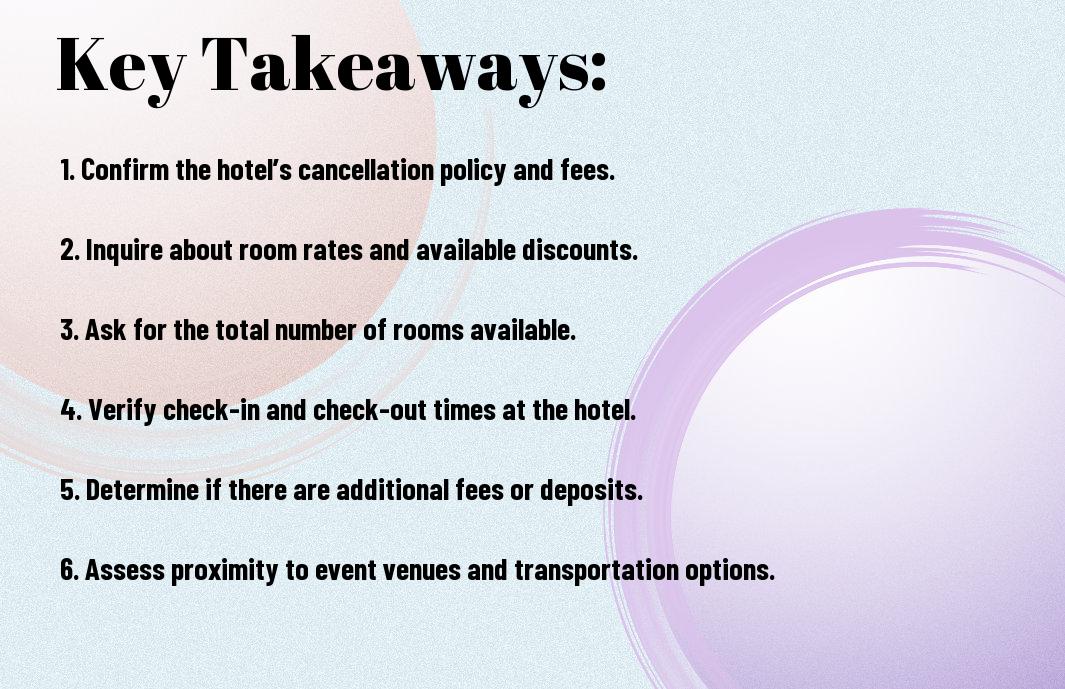
Key Takeaways:
- Understand the Terms: Before securing a room block, clarify the cancellation policies and deposit requirements to avoid unexpected charges.
- Assess the Amenities: Check what amenities are available, such as parking, Wi-Fi, and breakfast, to ensure they meet your group’s needs.
- Negotiate Rates: Always inquire about available discounts or perks for booking a large number of rooms; this can lead to significant savings.

What are the rates?
A major aspect to consider when booking a room block is the rates offered by the hotel. You’ll want to understand not only the base price per room but also how that price compares to standard rates. Room blocks often offer discounted rates for a specific number of rooms, so it can be beneficial to ask for a breakdown of costs, including the minimum number of nights required and any fluctuating prices that may apply during your event’s dates. This will allow you to budget accordingly and ensure you’re getting a fair deal.
Group discounts available?
An important question to ask is whether the hotel offers group discounts. Many hotels provide lower rates per room when a certain number of rooms are reserved, which can be a significant cost saver for your attendees. You should also inquire about any tiered pricing structures that may apply if you exceed a specific number of rooms booked. This information can assist you in understanding how to maximize those savings as you plan your event.
Additional fees included?
The next thing to clarify is whether there are any additional fees included in the rates. It’s common for hotels to charge extra for amenities such as parking, internet access, or resort fees, and you want to ensure that your budget accommodates these potential costs. Additionally, it’s wise to ask if these fees can be waived or negotiated, especially if you are booking multiple rooms.
Plus, make sure to ask for a complete list of services that your room block includes. This can encompass everything from breakfast and shuttle services to early check-in or late check-out options. Understanding what is and isn’t included will help you better assess the value of your chosen hotel and avoid any surprises when it’s time to settle the bill. Knowing these details will empower you to make a well-informed decision for your event’s accommodations.
Room Availability Dates?
It is necessary to confirm the availability of rooms for your desired dates well in advance. Many hotels have limited inventory for room blocks, especially during peak seasons or major events in the area. By checking availability early, you can secure your preferred dates and avoid the stress of last-minute arrangements. Make sure to inquire about the number of rooms available and how long you can hold them without a deposit, which can give you more time to finalize your plans.
Check-in and Out Times?
While booking a room block, you should pay close attention to the hotel’s check-in and check-out times. These times can vary significantly between establishments and can affect your guests’ overall experience. Knowing the standard check-in and check-out times allows you to coordinate transportation and schedules for your group effectively. If your event requires a unique timeline, it’s wise to ask the hotel if they can accommodate earlier check-ins or later check-outs to suit your needs.
Any Blackout Dates?
Even if a hotel appears to have availability during your desired dates, it is necessary to ask about any blackout dates. These are specific dates when the hotel may not be able to offer the negotiated rates due to high demand or other events taking place in the area. Blackout dates can significantly impact your budget, so you should clarify these details upfront to avoid any surprises later on. It’s an opportunity for you to evaluate alternatives or make necessary adjustments to your plans if your ideal dates coincide with these restrictions.
To ensure your planning goes smoothly, ask the hotel directly for a list of any potential blackout dates. Knowing these dates in advance can help you make more informed decisions and potentially choose alternative times that still align well with your event. This knowledge can also aid in setting realistic expectations for your guests regarding their accommodation options. Being proactive about identifying these restrictions will lead to a better experience overall.
Booking and Cancellation Policies?
Now that you’ve identified the hotel that meets your needs, it’s necessary to understand their booking and cancellation policies thoroughly. These policies can vary greatly between hotels and can significantly impact the overall experience for you and your guests. It is advisable to clarify the terms regarding how to secure your room block, the timeline for finalizing your reservation, and any specific conditions under which you or your guests can cancel without incurring penalties.
Deposit Requirements?
You’ll want to inquire about the deposit requirements for securing your room block. Many hotels require a percentage of the total estimated cost as a deposit to hold the rooms. Understanding how much you need to put down, as well as the deadlines for making this payment, can help you manage your budget effectively. It’s wise to know if your deposit is refundable or non-refundable, as this can impact your financial planning should your plans change.
Penalty Fees Involved?
For most hotels, there are specific penalty fees you should be aware of regarding cancellations and no-shows. These fees can often vary based on the size of your group and how close to the event date you decide to make changes. By understanding these penalties upfront, you can make informed decisions about your booking and plan contingencies in case you need to adjust your room block later.
For instance, some hotels may enforce a cancellation fee if you decide to reduce the number of rooms or cancel entirely close to your event date. In other cases, you might be responsible for a certain percentage of the total room block if you do not fill all reserved rooms. Being fully versed in the potential financial implications of your booking will ensure that you avoid unexpected costs and maintain your budget throughout the planning process.
What are the payment terms?
Not every hotel offers the same payment terms, so it’s imperative for you to clarify this aspect before securing your room block. Understanding the payment structure not only helps you manage your budget but also ensures there are no surprises as your event date approaches. You should inquire whether payments are required upfront or if there’s a flexible schedule that allows you to pay in increments leading up to your event. Knowing this information can significantly aid in your planning efforts and cash flow management.
Payment methods accepted?
An important aspect of payment terms to consider is the type of payment methods the hotel accepts. You should ask whether you can pay via credit card, debit card, bank transfer, or any other option. Certain hotels may have restrictions or preferences, and knowing this can help you streamline the transaction process. Some hotels may also offer discounts for specific payment methods, so ensure you gather this information to make the most economical choice.
Final payment due date?
To avoid any last-minute complications, it’s vital to understand when the final payment is due. Each hotel can set its own timeline for this deadline, so you will need to ask specifically about the date on which your payment must be completed. Planning ahead will help you manage your budget and ensure funding is available when necessary, which will keep your event organized and stress-free.
For instance, if the final payment is due just a week before your event, you’ll need to coordinate this with your other financial commitments. Knowing the due date allows you to set reminders and allocate sufficient funds in advance, preventing any financial hiccups that could affect your booking. Understanding the timing can also help you gauge whether there are penalties for late payments, which can further inform your planning strategy.
Amenities Available On-Site?
All the amenities a hotel offers can significantly enhance your group’s experience during your stay. When evaluating potential venues for your room block, you should consider the amenities provided on-site. These may include features such as a fitness center, swimming pool, business facilities, and dining options. Make sure that the amenities align with your group’s preferences and needs to ensure a comfortable and accommodating stay for everyone involved.
Free Wi-Fi Offered?
Some hotels offer free Wi-Fi as a part of their amenities, which can be an incredibly beneficial feature for you and your guests. Having complimentary internet access allows for seamless communication, whether your guests need to check work emails, stay connected on social media, or simply search for activities in the area. When you inquire about Wi-Fi availability, also ask if there are any restrictions, such as limited bandwidth or usage limits, that could affect your group.
Parking Options Provided?
Amenities related to parking can significantly influence the overall experience for your guests, especially if they are traveling from different locations. You’ll want to find out what types of parking are available—options may range from self-parking and valet service to complimentary parking for overnight guests. Additionally, inquire about the parking fees, as hidden costs can surprise your attendees. Creating clarity around parking will help minimize any stress or confusion when your group arrives.
Plus, understanding the parking situation allows you to manage logistics effectively for any events or gatherings scheduled during your stay. Knowing when and where your guests can park ensures that everyone arrives on time and with ease. If the hotel is located in a bustling area, nearby parking options are also worth exploring, as they can accommodate additional attendees who may not stay overnight at the hotel.
Location of Hotel?
Many factors contribute to selecting the right hotel for your room block, and location is one of the most important. A hotel’s proximity to your event venue can significantly enhance the experience for your guests. When your hotel is conveniently located near the event site, it reduces travel time, making it easier for attendees to arrive punctually and without stress. This can be especially valuable for large gatherings or conventions where schedules can be tight, and every minute counts.
Proximity to Event Venue?
Location is not just about the hotel address; it’s about how easy it is for your guests to access the event venue. When assessing hotels, consider the average commute time and factor in traffic patterns during the time of your event. If the venue is within walking distance, you can enhance your guests’ experience by allowing them to enjoy the local area, minimize transportation cost, and foster a sense of community among attendees. If driving is necessary, inquire about parking options and any potential fees that may arise.
Accessibility Options Available?
Little attention should be given to accessibility options when evaluating your hotel choices. Ensuring that the hotel accommodates people with varying needs can make a significant difference for some of your guests. You will want to confirm that the hotel provides features like wheelchair access, elevators, and accessible rooms to ensure everyone has a comfortable stay.
Plus, look for hotels that offer additional services like transportation for guests requiring assistance. Some hotels may provide shuttles to and from the venue, as well as support for those with mobility challenges. Understanding these factors in advance will help you create an inclusive environment for all your guests, ultimately contributing to a successful event.
Room Types Offered?
Your first step in reviewing a hotel room block is to inquire about the various room types offered. Understanding the options available will help you ensure that your guests are accommodated comfortably according to their needs and preferences. Ask the hotel for a comprehensive list and consider the following questions:
- What standard room types are available?
- Do they offer deluxe or upgraded rooms?
- Are there suite options for larger groups or families?
- What additional amenities are included with each room type?
- Can you provide a comparison of room types for better decision-making?
Thou will be in a better position to negotiate rates and understand the offerings when you have this information at hand.
| Room Type | Features |
|---|---|
| Standard Room | Basic accommodations with important amenities. |
| Deluxe Room | More spacious with upgraded furnishings and amenities. |
| Suites | Separate living areas, often with kitchenettes. |
| Accessible Rooms | Designed for easy access and mobility. |
| Connecting Rooms | Rooms with an internal door for families or groups. |
Standard, Deluxe, Suites?
While assessing room options, you should pay close attention to the distinctions between standard, deluxe, and suite accommodations. Standard rooms generally provide important amenities such as a bed, desk, and bathroom. A deluxe room, however, may involve additional space, upgraded furnishings, and premium services that enhance comfort. Furthermore, suites typically break away from traditional designs, offering separate living areas, kitchenettes, and luxury features that can appeal to families or those seeking more space.
Bed Configurations Available?
Types of bed configurations can significantly impact your guests’ comfort levels. Different configurations allow you to cater to various party sizes and preferences. For example, you might require rooms with multiple beds for families or those traveling in groups, or perhaps rooms with a king-size bed for couples. It’s important to ask the hotel about the availability of different bed types, such as two queen beds versus one king, and any possible configurations for your group. Understanding these options allows you to better accommodate your guests and meet their needs.
With the variety in bed configurations offered by hotels, you can maximize the comfort of your guests. Guests traveling as a duo may prefer a king bed, while those with children might prefer rooms with two queens. Some hotels also offer rollaway beds or cribs upon request, making your planning much easier. Ensure you clarify any specific needs or arrangements in advance so that the hotel can accommodate them effectively.
Contract Terms and Conditions?
Keep in mind that understanding the contract terms and conditions of your hotel room block is vital for a seamless experience. These details outline your rights and responsibilities, as well as those of the hotel. It’s important to get clarity on all components of the agreement, including negotiation flexibility and escalation processes in case issues arise. Since policies can vary significantly from one hotel to another, take the time to review each one carefully before moving forward.
Length of the Agreement?
You’ll want to establish the length of your agreement to ensure your needs are met well in advance of your event date. Some hotels may require a longer commitment, while others might offer flexible terms that can adapt to your planning timeline. Knowing this information can play a big part in your decision-making process, as it can affect not only the pricing but also the guarantees of availability for your guests.
Refund and Amendment Policies?
Terms regarding refund and amendment policies are just as important to discuss before finalizing your bookings. You should clearly understand how many guests can be added or removed from your block without penalty, as well as the timeline for these changes. Policies can differ quite a bit, so ensuring that you have a firm grasp on what constitutes a refundable deposit or the extent of potential fees for modifications can save you from unexpected expenses down the line.
To avoid any surprises, it is advisable to ask for documentation outlining the refund and amendment policies in detail. Clarifying whether deposits are fully refundable or what fees may be associated with altering your reservation can give you peace of mind and flexibility as your event approaches. Make sure you know all timeframes associated with both refunds and changes, as this allows you to strategize your guest list effectively and plan accordingly.
Contact Information for Support?
Once again, before committing to a hotel room block, it’s vital to gather contact information for support. This includes obtaining direct phone numbers and email addresses for the sales team and on-site staff. Having reliable contact information ensures that you can reach out quickly for any last-minute changes or urgent queries related to your group’s accommodations, check-in procedures, or billing. The clarity and accessibility of this information can significantly impact your overall experience, providing peace of mind as you plan your event.
On-site Coordinator Available?
Some hotels offer the advantage of having an on-site coordinator dedicated to your group. It’s important to inquire whether you will have a designated point of contact who can assist you during your stay. An on-site coordinator can help streamline communication between you and the hotel staff, ensuring any issues are resolved swiftly so you can focus on your event. Knowing that there’s someone familiar with your group’s needs can enhance your overall experience significantly.
After-hours Assistance Offered?
Some hotels may have limited support hours, while others provide round-the-clock assistance. When investigating potential room blocks, ask whether after-hours assistance is available. This aspect can be particularly important for guests arriving late or for unexpected situations that might arise outside regular business hours. Having a hotel that offers continuous support can minimize disruption and enhance the comfort of your guests during their stay.
A hotel with after-hours assistance demonstrates a commitment to guest satisfaction. Ensure to verify how quickly they can respond to emergencies and what types of issues they can address when your group is not in the office. Understanding these details will help you gauge whether the hotel can truly meet your needs, no matter the hour.
Summing up
The process of booking a room block for your event can be streamlined by asking the right questions upfront. Understanding the specifics of your accommodation needs allows you to secure the best options for your guests while optimizing your budget. By clarifying details about availability, pricing, cancellation policies, and amenities, you can make informed decisions that enhance the experience for everyone involved.
Your choice of hotel can significantly impact the success of your event, so taking the time to address these ten important questions will streamline your planning process. By equipping yourself with the answers you need, you can move forward with confidence, ensuring that your guests are well taken care of and that your event runs smoothly.
Q: What factors should I consider when deciding the number of rooms to book in a room block?
A: When deciding the number of rooms to book, consider your event’s attendance size, the travel plans of your guests, and potential drop-off rates. It’s beneficial to account for peak occupancy dates, as well as any additional guests who might not initially confirm their attendance. Consulting your attendee list or sending out pre-event surveys can also provide insight into probable guest reservations. hotblockchain nude
Q: What amenities and services should I inquire about when booking a room block?
A: It’s crucial to inquire about a variety of amenities that can enhance your guests’ experience. Ask about availability of complimentary breakfast, Wi-Fi access, airport shuttles, parking options, fitness facilities, and whether there are spaces for group meetings or gatherings. Additionally, checking on any discounted services like dry cleaning or access to business centers can be beneficial for your guests.
Q: How do cancellation policies and payment terms vary among hotels for room blocks?
A: Cancellation policies and payment terms can differ significantly from one hotel to another. Ensure to ask about the policy for both the hotel and the guests. Understand how many days before the event you can cancel without incurring charges, and whether there are any penalties for guests who may need to cancel their reservations. Knowing the payment terms, including deposits, payment deadlines, and accepted payment methods, will help prevent misunderstandings later.


